Bathroom leakage issues are far more common than most owners realise. Between our year-round humidity, frequent hot showers, and the compact wet-area layouts found in many HDB flats and condominiums, moisture tends to accumulate faster than expected. Over time, even a minor failure in the bathroom waterproofing layer can develop into a serious problem, not only damaging your own unit, but potentially causing seepage complaints from the neighbour below.
What makes bathroom waterproofing issues difficult is that they rarely appear overnight. In many cases, the failure starts beneath the tiles, around floor traps, or along wall-to-floor joints, where water slowly seeps through over weeks or even months. By the time visible signs such as peeling paint, ceiling stains, or loose tiles appear, the repair scope may already be much larger and costlier.
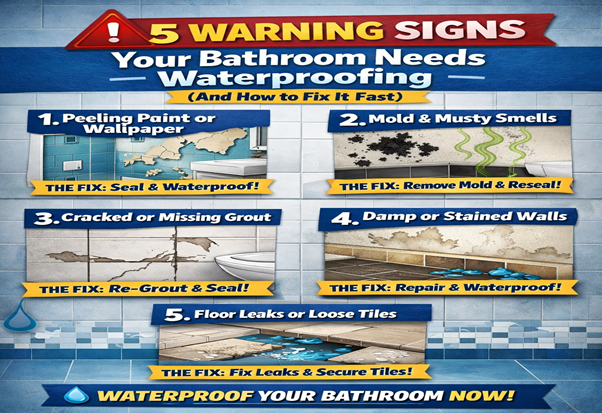
This article covers 5 common warning signs that your bathroom waterproofing may be failing, along with practical solutions and early intervention tips suited for Singapore homes, so you can resolve the issue quickly before it escalates into major repair works or neighbour disputes.
1. Persistent Damp or Musty Smell
If your bathroom smells damp even after cleaning, that’s usually not just poor ventilation but it’s a sign of trapped moisture. In many Singapore homes, especially older HDB flats, waterproofing membranes may already be worn out after 10–15 years. When water seeps beneath tiles, it doesn’t dry easily and this creates the perfect environment for bacteria and mould growth.
Water is likely penetrating beneath your tiles or behind walls, and here are some ways to fix it quickly:
- Start by checking obvious areas like floor traps and shower corners, if no visible leak is found, a professional water test may be needed.
- For early-stage issues, PU injection grouting can seal gaps without hacking tiles.
- For more severe cases, redoing waterproofing might be unavoidable.
2. Mould/Black Stains on Ceiling and Walls
You might think mould is just a cleaning issue but if it keeps coming back, it’s more often a waterproofing failure. A very common scenario in Singapore is that mould appears on the ceiling just outside the bathroom, or worse, on your neighbour’s ceiling below your toilet. That’s a big red flag that we should take note of as it means water is escaping the waterproofed zone and affecting surrounding structures. These are some of the remedies we can take:
- Clean the mould temporarily with anti-mould solution.
- Check for cracks in grout lines or around fixtures.
- If the mould keeps returning, waterproofing has likely failed.
- Engage a contractor to inspect whether the issue is from:
- Floor slab leakage
- Pipe leakage
- Failed waterproofing membrane
3. Loose or Hollow Bathroom Tiles
Try tapping your bathroom tiles. If you hear a hollow sound, something is wrong underneath. In Singapore, this often happens because water seeps under tiles and weakens the bonding over time. Eventually, tiles may pop up or crack and water has penetrated beneath the tiles and compromised the adhesive layer. These are some ways that we can fix it quickly:
- Replace affected tiles immediately to prevent further water ingress.
- Apply temporary sealing if needed.
- If multiple tiles are affected, it’s a strong sign the waterproofing layer has failed.
- A full re-waterproofing (hack and redo) may be the safest long-term solution.
4. Water Stains or Peeling Paint Outside the Bathroom
One of the most obvious signs but often ignored is damage outside the bathroom. You might notice paint bubbling or peeling on adjacent walls, brown water stains or damp patches along skirting or door frames. In many HDB units, this happens along the wall shared with the bedroom or living area. Water is escaping the bathroom and seeping into surrounding walls.
- Identify whether the source is from:
- Shower area
- Basin pipe
- Concealed piping
- If pipes are the issue, consider rerouting to exposed piping (common in SG repairs).
- If waterproofing is the issue, targeted repairs like PU injection or partial hacking may help.
- Repainting alone will NOT solve the problem and it will come back.
5. Water Meter Running When Not in Use
This one surprises many homeowners. If your water meter is still moving when no taps are running, it usually indicates a concealed pipe leak. And in bathrooms, this often ties back to waterproofing-related issues or hidden pipe failures. We can do the following checks for such cases:
- Turn off all water points and observe the meter.
- If it’s still moving, call a specialist for leak detection.
- In many Singapore cases, the best fix is:
- Terminating concealed pipes
- Re-running new exposed pipes to prevent future hacking
- Combine this with waterproofing checks to ensure the issue doesn’t repeat.

Why You Shouldn’t Delay Waterproofing Repairs
In Singapore, bathroom leaks don’t just affect you. They can involve neighbour complaints, HDB or MCST intervention and cost-sharing disputes. Delaying repairs can often lead to these issues:
- Structural damage to concrete
- More extensive hacking work
- Higher repair costs (sometimes double or triple)
Fixing early is always cheaper and less disruptive.
Fast Solutions Vs Long-Term Fixes
Depending on the severity of the water leakage, here’s how most waterproofing issues are handled locally:
- Quick fixes (non-hacking):
- PU injection grouting
- Re-grouting tiles
- Sealing joints and cracks
- Mid-level repairs:
- Replacing affected tiles
- Partial waterproofing
- Full long-term solution:
- Hack entire bathroom floor
- Apply new waterproofing membrane
- Retile and reinstate fittings
A good contractor will always inspect and analyse the root cause of the water leakage before proposing the best suited remedy. They should always try to minimise hacking first, but not at the expense of long-term reliability.
Warning Signs Your Bathroom Need A Fix to Save Thousand of Dollars
Bathroom waterproofing problems rarely fix themselves. What starts as a small issue like a bit of mould or a damp smell can quickly turn into a major repair job.
If you notice any of these 5 warning signs, it’s worth getting a proper inspection early. In many cases, fast action can save you thousands of dollars and a lot of inconvenience. And in Singapore’s humid environment, staying ahead of water damage isn’t just maintenance but instead a necessity.