Basement seepage and water leakage are common problems in many Singapore properties, especially older landed houses, commercial buildings, and underground structures. With Singapore’s humid weather, frequent heavy rain, and high groundwater levels, water intrusion issues can slowly develop without property owners noticing until the damage becomes serious.
At first, it may only look like a small damp patch on the wall or slight bubbling paint near the basement floor. Over time, these minor signs can turn into persistent leakage, mould growth, concrete deterioration, and unpleasant odours. In more severe cases, water seepage can even affect electrical systems, flooring finishes, and stored items inside the basement.
Many property owners make the mistake of simply repainting the wall or patching the surface. Unfortunately, basement leakage problems usually originate deeper within the structure. Unless the actual source is identified and repaired properly, the issue often returns after a few months.
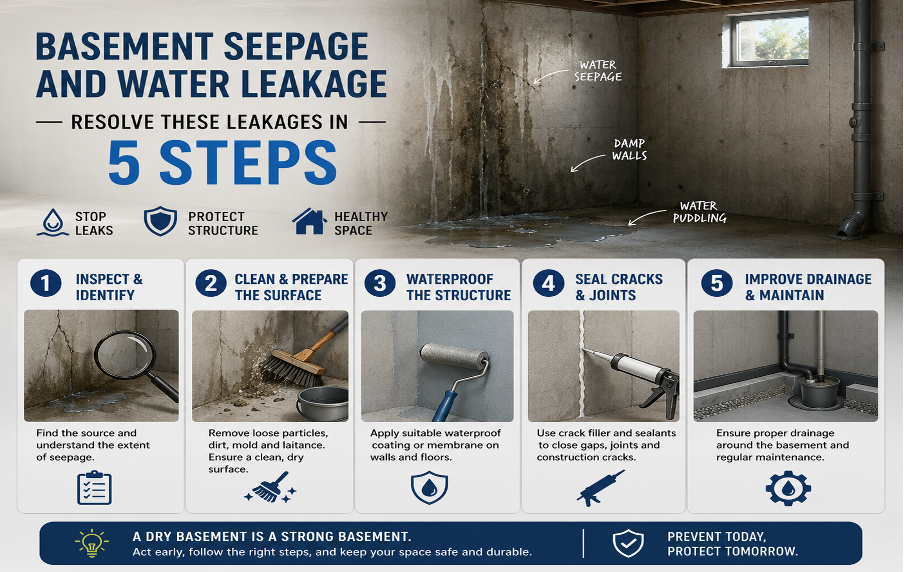
The good news is that most basement seepage problems can be resolved effectively with the right inspection and repair approach. This article explores the 5 practical steps commonly used by waterproofing specialists in Singapore to tackle basement seepage and water leakage issues.
Step 1: Identify the Actual Source of Water
The first and most important step is proper inspection and diagnosis. Basement leakage does not always originate from the exact spot where water appears. For example, water may travel through concrete slabs, construction joints, wall cracks, pipe penetrations, or even external retaining walls before showing up inside the basement. In some cases, groundwater pressure outside the structure forces moisture through tiny pores in the concrete.
Common signs of basement seepage include:
- Damp or discoloured wall patches
- Peeling paint or bubbling plaster
- Musty smell inside the basement
- Water stains near wall-floor junctions
- Efflorescence (white powdery deposits on concrete walls)
- Mould or mildew growth
- Hairline cracks with moisture presence
Professional waterproofing contractors often use moisture meters, thermal imaging inspection, and visual assessment to determine the leakage path accurately. This step is crucial because treating the wrong area only wastes time and money. In Singapore, basement seepage is especially common after prolonged rainy periods when groundwater pressure increases around underground structures.
Step 2: Repair Structural Cracks and Leakage Points
Once the leakage source is identified, the next step is to repair all active seepage points properly. Concrete cracks are one of the most common causes of basement leakage. Even small hairline cracks can allow water to penetrate over time. Depending on the severity and condition of the crack, different repair methods may be required.
One widely used solution is PU injection grouting. This method involves injecting polyurethane material into cracks, voids, or leaking areas under pressure. The material reacts with water and expands to form a waterproof seal within the concrete structure. PU injection is commonly used to stop active water seepage through concrete cracks, wall-floor junctions, pipe penetrations, retaining walls, and honeycomb concrete defects.
For non-moving structural cracks, epoxy injection may also be used to restore structural integrity while sealing the leakage path. In older Singapore properties, leakage can also occur around service penetrations where pipes pass through basement walls. Over time, waterproof sealants may deteriorate due to movement, ageing, or moisture exposure. Repairing these leakage points early helps prevent further water migration within the structure.
Step 3: Improve Basement Waterproofing Protection
After repairing the leakage source, the next step is strengthening the waterproofing system to prevent recurrence. Many older basements were constructed years ago using outdated waterproofing methods or materials that may have already deteriorated. In some cases, waterproofing membranes may fail due to age, ground settlement, or constant hydrostatic pressure.
Depending on the condition of the basement, waterproofing specialists may recommend:
- Cementitious waterproofing coating
- Crystalline waterproofing treatment
- Waterproof membrane systems
- Negative side waterproofing applications
- Protective drainage systems
For internal basement waterproofing works, cementitious coatings are commonly applied onto concrete walls and floors after proper surface preparation. These coatings help resist moisture penetration and are suitable for many basement environments. In more severe seepage conditions, additional drainage channels or pressure relief systems may also be installed to manage groundwater movement around the structure. A proper waterproofing system not only stops visible leakage but also protects the concrete structure from long-term moisture damage.
Step 4: Rectify Poor Drainage and External Water Issues
Sometimes the basement itself is not the main problem. External water management issues can also contribute heavily to seepage. In Singapore, heavy rainfall can quickly overwhelm poor drainage systems around landed properties and buildings. If rainwater accumulates near retaining walls or basement structures, hydrostatic pressure increases significantly.
Common external causes include:
- Choked drainage systems
- Improper ground slope towards the building
- Failed external waterproofing membrane
- Ponding water near retaining walls
- Damaged planter box waterproofing
- Leaking external pipes
Water naturally follows the path of least resistance. If external drainage is poor, moisture eventually finds its way into basement walls and floors. This is why experienced contractors usually inspect both internal and external conditions before recommending repairs. Simply treating the internal wall without solving the external water source may only provide temporary improvement. For some landed houses in Singapore, rectifying the surrounding drainage gradient alone can significantly reduce basement seepage problems.
Step 5: Conduct Monitoring and Preventive Maintenance
Even after repairs are completed, regular monitoring remains important. Basements operate in challenging environments due to constant moisture exposure and underground pressure conditions. Small warning signs should never be ignored because early intervention is always more cost-effective than major repairs later.
Property owners should periodically check for:
- New damp patches
- Water stains near cracks
- Mould growth
- Paint bubbling
- Musty odours
- Ceiling or floor moisture marks
Routine maintenance of nearby drainage systems, waterproof sealants, and plumbing lines also helps reduce future leakage risks. For commercial buildings and larger properties, periodic waterproofing inspection can help identify potential issues before they escalate into serious structural problems. In Singapore’s climate, preventive maintenance is especially important because high humidity and frequent rainfall can accelerate deterioration if moisture problems are left unresolved.
Why Basement Leakage Should Never Be Ignored
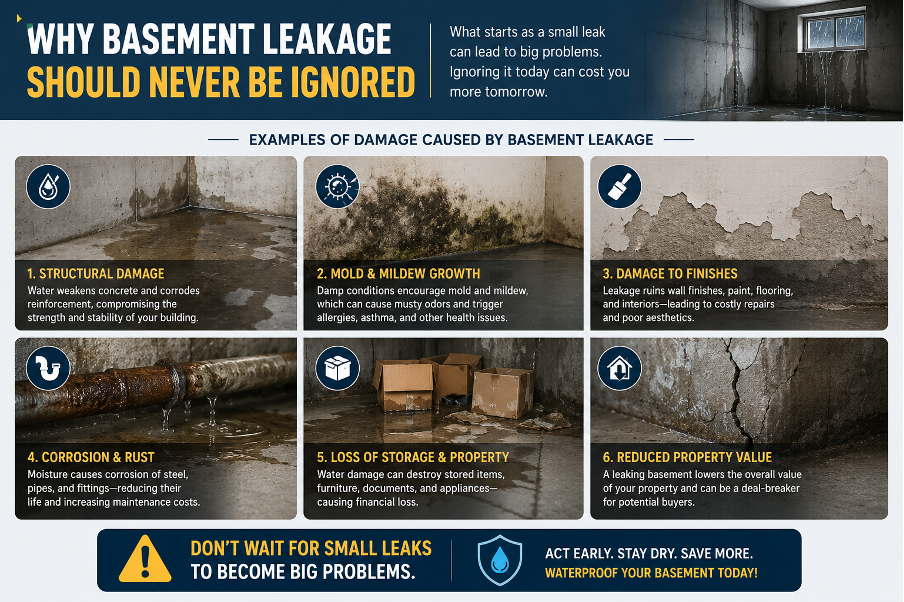
Many people assume basement seepage is only a cosmetic issue. In reality, long-term water intrusion can lead to much more serious consequences.
Persistent moisture may weaken concrete structures over time, damage interior finishes, create unhealthy mould conditions, and affect indoor air quality. In severe cases, leakage can also corrode steel reinforcement within concrete, leading to structural deterioration.
For commercial properties, unresolved basement leakage may also disrupt operations, damage stored inventory, and create safety concerns for occupants. Addressing basement seepage early not only protects the property but also helps avoid higher repair costs in the future.
Resolve Leakage with These 5 Steps
Basement seepage and water leakage are common issues in Singapore due to the country’s wet climate and underground moisture conditions. While small damp patches may seem minor initially, they often indicate deeper waterproofing or structural problems beneath the surface.
The key to successful repair lies in proper diagnosis, targeted repair methods, effective waterproofing, and long-term preventive maintenance. By following these 5 practical steps: identifying the leakage source, repairing cracks, improving waterproofing, rectifying drainage issues, and conducting regular monitoring, property owners can significantly reduce the risk of recurring basement leakage problems.
If you notice signs of basement seepage in your property, it is always advisable to engage experienced waterproofing professionals for proper inspection and repair recommendations before the damage worsens.