
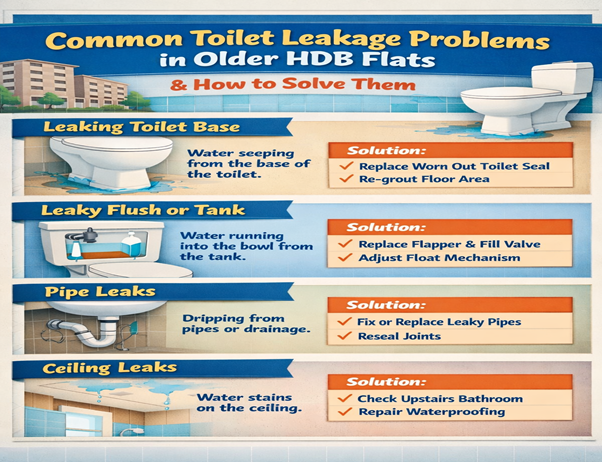
If you’ve stayed in an older HDB flat long enough, chances are you’ve either experienced a toilet leak or received that awkward knock from your downstairs neighbour complaining about water dripping from their ceiling. Toilet leakage is one of the most common issues in ageing HDB flats, especially those that are 20 to 40 years old. And in Singapore’s humid climate, once water starts seeping, it doesn’t take long before it turns into mould, stains, and bigger repair bills.
The good news? Most of these problems are well understood and more importantly, fixable. This article breaks down the most common toilet leakage issues in older HDB flats and what you can realistically do about them.
1. Failed Waterproofing Membrane (The #1 Culprit)
In older HDB flats, the waterproofing membrane beneath your toilet tiles is often the main cause of leakage. This membrane is supposed to act as a barrier, preventing water from seeping into the concrete slab. But over time, typically after 10 to 15 years, it starts to deteriorate due to constant exposure to water, cleaning chemicals, and daily usage. That’s why ceiling leaks in HDB flats are so common, especially in toilets
Warning Signs to look out for:
- Water stains or peeling paint on the ceiling below
- Damp or musty smell
- Mould growth or efflorescence (white powdery residue)
Solutions:
Full Hacking & Re-waterproofing (Long-term solution)
- Remove tiles and screed
- Apply new waterproof membrane
- Retile the toilet
Non-hacking waterproofing (Short to mid-term solution)
- Apply transparent or surface waterproofing coating
- PU injection grouting for cracks
Full hacking and re-doing the entire waterproofing system is the usually most reliable fix, especially for old flats, but it is usually costlier and messy. Undertaking non-hacking methods are less messy and faster, but may not last as long if the membrane has already failed badly.
2. Cracked or Deteriorated Grout Lines
In many older toilets, you’ll notice grout lines becoming powdery, cracked, or even missing. Grout isn’t waterproof. Once it deteriorates, water seeps through tile joints and slowly penetrates into the slab beneath. Over time, this overwhelms the underlying waterproofing layer.
Warning Signs:
- Darkened grout lines
- Water stains around tile joints
- Persistent dampness after showering
Solutions:
- Re-grouting (for minor cases)
- Apply sealant or grout sealer
- If widespread → consider waterproofing treatment
3. Leaking Concealed Pipes
Older HDB flats often have concealed pipes embedded within walls or floor slabs. As these pipes age, they may corrode or develop leaks. Unlike waterproofing issues, pipe leaks tend to be more “active”, meaning water leaks even when the toilet is not in use.
Warning Signs:
- Constant damp patches (even when toilet is dry)
- Unexplained increase in water bills
- Water dripping sounds within walls
Solutions:
- Pressure testing to confirm pipe leak
- Hack and replace affected pipe
- Re-route new exposed piping (common in older flats)
4. Faulty Toilet Bowl Seals or Connections
Sometimes the problem isn’t the whole toilet but just the fittings. Components like the wax ring, rubber gaskets, or pipe joints can wear out over time, causing water to leak from the base of the toilet bowl.
Warning Signs:
- Water pooling around toilet base
- Slight movement when sitting on the bowl
- Bad odour (due to broken seal)
Solutions:
- Replace wax ring or rubber seal
- Tighten or re-fix toilet bowl
- Reseal with waterproof silicone
5. Floor Trap & Pipe Penetration Leakage
Another common issue in older HDB toilets is leakage around the floor trap (the drain) or pipe penetrations. These are weak points where waterproofing often fails first, especially if the original installation was not done properly. In some cases, HDB even recommends localised repair works instead of hacking the whole toilet.
Warning Signs:
- Water leaking only when shower is used
- Dampness concentrated near floor trap area
- Leakage affecting specific corner of ceiling below
Solutions:
- Localised hacking around floor trap
- Re-sealing pipe penetrations
- PU grouting for targeted repair
6. Hairline Cracks in Concrete or Tiles
Older buildings naturally go through expansion and contraction due to temperature changes. Over time, this can cause hairline cracks in concrete or tiles, allowing water to seep through. This is often a hidden cause that requires proper inspection tools.
Warning Signs:
- Fine cracks on tiles or walls
- Water seepage along specific lines
- Recurring leaks despite repairs
Solutions:
- PU injection grouting (common method)
- Crack sealing with waterproof compounds
- Overlay waterproofing
7. Choked Floor Traps and Poor Drainage
In some cases, the issue is not leakage but water overflow. Clogged floor traps can cause water to accumulate and seep into areas it shouldn’t, especially in older toilets where slope and drainage may not be ideal.
Warning Signs:
- Water ponding after shower
- Slow drainage
- Occasional overflow
Solutions:
- Clear choke using plumber tools
- Regular maintenance
- Improve floor gradient (if renovating)
HDB Context: Who Pays for the Leak?
This is where things get a bit sensitive. In HDB flats, leaks between floors are usually a shared responsibility between the upper and lower unit owners. That’s why it’s common practice to:
- Inspect together
- Agree on repair method
- Share the cost
Handling this early and amicably can save a lot of trouble later.
Conclusion
Toilet leaks rarely fix themselves. In fact, most start small like hairline cracks, worn grout, minor seepage but gradually worsen over time. Especially in Singapore’s humid climate, delaying repairs can lead to these bigger problems:
- Structural damage
- Mould growth
- Higher repair costs
If your HDB flat is more than 15–20 years old and you’re seeing early signs of leakage, it’s worth getting a proper inspection done.Especially if you are looking for a toilet waterproofing service. Sometimes a simple re-grouting job is enough. Other times, a full waterproofing overhaul is the smarter long-term investment.