If you own a landed property, manage a commercial building, or even stay on the top floor of an HDB or condo in Singapore, roof waterproofing isn’t something you can afford to ignore. With our year-round heat, sudden heavy downpours, and high humidity, roofs in Singapore take quite a beating.
A common question property owners ask is: “How long does roof waterproofing actually last?” The short answer is it depends. But in Singapore’s climate, waterproofing generally doesn’t last as long as you might expect.
This article breaks down in a practical, local context so you know what to expect and when to take action before leaks start showing up.
Typical Lifespan of Roof Waterproofing in Singapore
In ideal conditions, roof waterproofing systems can last anywhere between 5 to 10 years. However, in Singapore, the realistic lifespan is often on the lower end of that range. Here’s a rough guide based on common waterproofing systems used locally:
Liquid-applied membrane (PU coating): 5–8 years
Torch-on membrane: 7–10 years
Cementitious waterproofing: 3–5 years
Acrylic coating systems: 3–6 years
Of course, these are just estimates of the lifespans. Some roofs fail earlier, especially if installation quality was poor or maintenance is neglected.
Why Waterproofing Wears Out Faster in Singapore
Unlike countries with distinct seasons, Singapore’s climate is consistently harsh on building materials.
1. Intense UV Exposure
Our sun is strong all year round. UV rays break down waterproofing membranes over time, causing them to become brittle and crack.
2. Heavy Rainfall
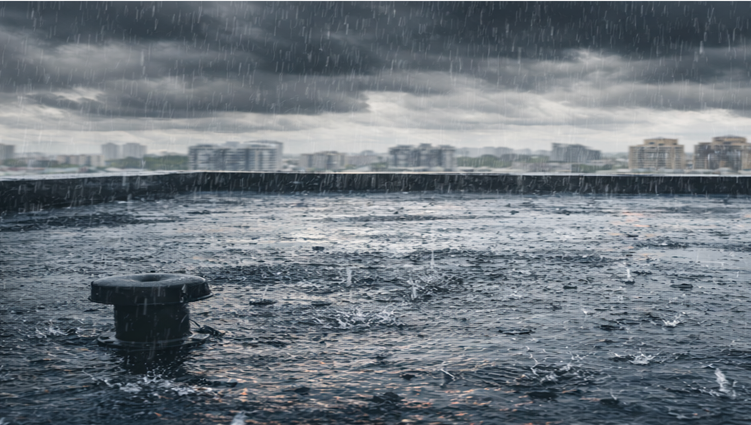
Sudden, intense rainstorms test the limits of your roof drainage and waterproofing system. If water starts ponding, it accelerates deterioration.
3. High Humidity
Moisture doesn’t dry out quickly here. This constant dampness weakens materials and encourages mould and algae growth.
4. Thermal Expansion and Contraction
Even without seasons, daily heat changes cause roofs to expand and contract. Over time, this movement creates small cracks in the waterproofing layer.
Signs Your Roof Waterproofing Is Reaching the End of Its Life
Most people only realise there’s a problem when water starts dripping inside but by then, damage is already done. These are some early warning signs to watch for to identify the durability of the existing waterproofing system:
- Water Ponding on the Roof
- After rain, if water sits on your roof for hours instead of draining away, it’s a problem. Ponding increases pressure on the waterproofing layer and speeds up failure.
- Cracks or Blistering on Surface
- If you notice bubbling, peeling, or cracks on the roof surface, it usually means the membrane is deteriorating.
- Ceiling Stains on Top Floor
- Brown stains, peeling paint, or damp patches on your ceiling are often linked to roof leakage.
- Mould Growth Along Ceiling Edges
- In Singapore homes, mould forming near ceiling corners is a common early sign of roof seepage.
- Previous Repairs Keep Failing
- If you’ve already done patch repairs but leaks keep coming back, the waterproofing system is likely at the end of its lifespan.
Can Waterproofing Last Longer Than 10 Years?
Yes, it can but only under the right conditions. Some roofs in Singapore do last beyond 10 years, especially if:
High-quality materials were used
Installation was done properly
Regular maintenance was carried out
The roof has proper drainage and slope
However, these cases are the exception rather than the norm. In reality, many waterproofing systems start showing issues around the 5–7-year mark.
How to Extend the Lifespan of Your Roof Waterproofing?
If you want to maximise your waterproofing investment, maintenance is key. Here are some practical steps that work well in Singapore:
1. Regular Roof Inspections
At least once a year, check for:
Cracks
Ponding water
Blocked drainage outlets
After heavy storms, it’s also good to do a quick inspection.
2. Keep Drainage Clear
Leaves, debris, and dirt can clog drains easily. In Singapore, with nearby trees and frequent rain, this happens more often than you think.
3. Recoat Before Total Failure
Don’t wait for leaks to happen. Recoating the waterproofing layer early can extend its lifespan without the need for full hacking or replacement.
4. Fix Small Issues Immediately
Hairline cracks or minor leaks are much cheaper to fix early. If left unattended, they become major repair works later on with much higher costs.
Repair vs Replace: What Should You Do?
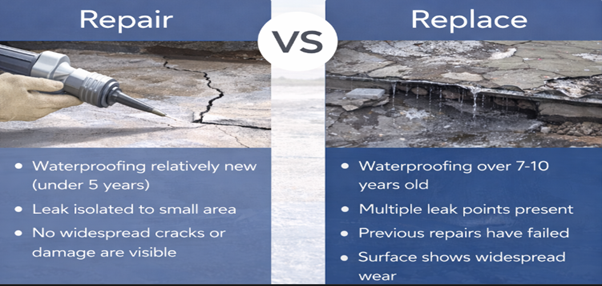
When facing roof leakage, many property owners ask whether they should repair or fully redo the waterproofing. Here’s a simple way to decide:
Go for repairs if:
- The waterproofing is still relatively new (under 5 years)
- The leak is isolated to a small area
- No widespread cracks or damage are visible
Consider full replacement if:
- The waterproofing is over 7–10 years’ old
- Multiple leak points are present
- Previous repairs have failed
- The surface shows widespread wear
In Singapore, many contractors will first recommend non-hacking solutions like PU injection or patching but if the underlying waterproofing system has failed, these are usually temporary fixes and will not resolve the water leakage issue.
Cost Considerations in Singapore
Roof waterproofing costs vary depending on these factors like roof size, types of waterproofing systems, accessibility and condition of the existing surface. A rough guide on the cost would be recoating works will be lower cost and is a short-term extension whereas a full waterproofing system replacement will be higher upfront cost, but longer-lasting.
While it might be tempting to go for the cheapest option, it’s important to think long-term. Repeated repairs can sometimes cost more than doing it properly once.
In Singapore, roof waterproofing issues show up differently depending on property type:
- Landed houses: More exposed to weather, so waterproofing tends to wear out faster
- Top-floor HDB units: Issues often show as ceiling leaks—coordination with town council may be required
- Commercial buildings: Larger flat roofs mean higher risk of ponding and membrane failure
Each case requires a slightly different approach, but the underlying principle is the same. Early detection saves money.
How Long Does Roof Waterproofing Last Exactly?
So, how long does roof waterproofing last in Singapore’s climate? Realistically, around 5 to 8 years for most systems, though some may last longer with proper care. The key is not to treat waterproofing as a one-time job, but as part of ongoing property maintenance.
If your roof hasn’t been checked in years, or you’re starting to notice small warning signs like damp patches or mould, it’s worth getting a professional inspection. Acting early can mean the difference between a simple repair and a major overhaul.
In Singapore’s unpredictable weather, staying ahead of roof issues isn’t just good practice but essential.