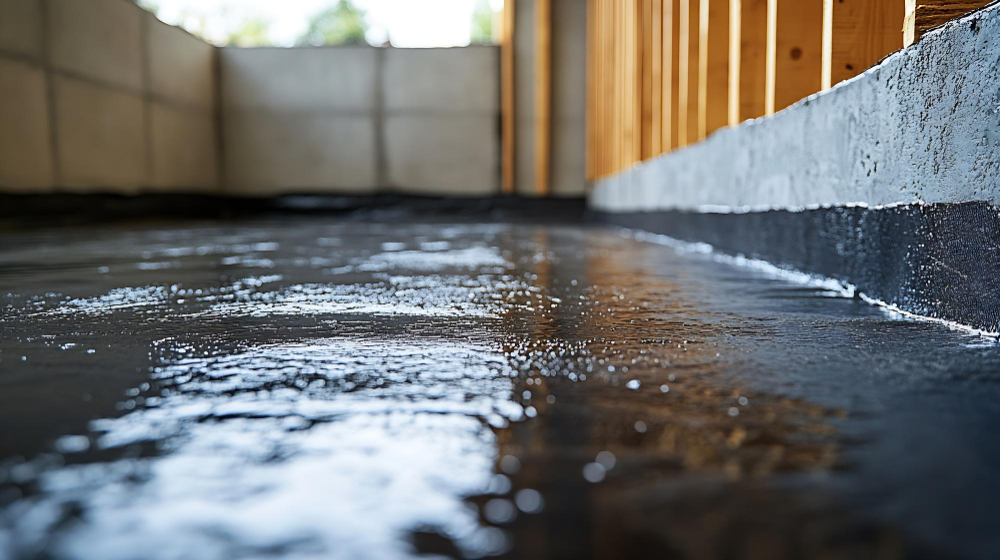
Waterproofing is a specialized technical process that creates an impermeable barrier, preventing water from penetrating a structure or material under specified conditions. Unlike basic water resistance, which merely slows water penetration, true waterproofing provides complete protection against moisture ingress, even under sustained exposure or pressure.
The distinction between waterproofing and water-resistance is crucial yet often misunderstood. Water-resistant materials can repel water to some degree and for limited periods, think of a water-resistant watch that handles splashes but fails during swimming. In contrast, waterproofing creates a comprehensive shield that maintains its integrity even under continuous water exposure or pressure. This difference becomes particularly significant in Singapore’s tropical climate, where buildings face not just occasional rain but persistent high humidity and downpours.
Waterproofing Fundamental
Waterproofing represents a fundamental structural protection rather than a cosmetic solution. While visible water damage like stains and peeling paint are obvious concerns, the true danger lies beneath the surface. Water may infiltrate and compromise structural integrity by corroding reinforcement steel, weakening concrete, and accelerating material degradation. A properly waterproofed structure maintains its structural soundness and longevity, preventing the cascade of problems that moisture intrusion initiates in Singapore where humidity is of top concern.
At a technical level, waterproofing works through multiple mechanisms depending on the system deployed. Membrane systems create physical barriers using materials like polyurethane, bitumen, or cementitious compounds that bond to surfaces and prevent water passage. Penetrative systems work differently as they chemically react with concrete substrates to form crystalline structures within pores and capillaries, blocking water while allowing vapor transmission. Advanced waterproofing solutions, like those employed by WaterproofingSG is able to penetrate building materials at the molecular level, creating hydrophobic zones that repel water molecules while maintaining the substrate’s breathability.
The most effective waterproofing solutions don’t just block water, it is able to manage it intelligently. They accommodate structural movement, resist UV degradation, and allow trapped moisture to escape as vapor. This balanced approach prevents the secondary problems often associated with sealed systems, such as condensation buildup or pressure accumulation that can compromise even well-intended waterproofing efforts.
Singapore’s Climate: A Perfect Storm for Water Damage
Singapore’s tropical climate creates a uniquely challenging environment for buildings and structures. Situated just one degree north of the equator, the city-state experiences what meteorologists consider one of the most aggressive environments for building materials and structural integrity. The numbers tell a compelling story: Singapore receives an average annual rainfall of over 2,100mm (approximately 83 inches), nearly double what other country experiences and significantly higher than many other major cities worldwide. This rainfall isn’t evenly distributed throughout the year but often comes in intense downpours that can deliver several inches of rain in just hours.
Beyond the sheer volume of precipitation, Singapore’s climate presents a trifecta of challenges such as:
Relentless Humidity: With humidity levels consistently ranging between 60% and 100% throughout the year, building materials rarely have an opportunity to fully dry out. This constant moisture presence accelerates deterioration of many construction materials, particularly those used in older buildings that weren’t designed with modern waterproofing technologies.
Intense Heat: Average temperatures hovering between 26-32°C (79-90°F) year-round create thermal expansion and contraction cycles that can gradually create microscopic cracks in concrete, plaster, and other building materials. When combined with high humidity, these tiny fissures become entry points for moisture.
Driving Rain: Singapore’s frequent thunderstorms often bring wind-driven rain that can force water into seemingly protected areas of buildings, including vertical surfaces that wouldn’t normally be exposed to direct rainfall.
This climate causes issue to concrete and buildings which water leakage does occur often, which includes and not limited to:
Concrete Spalling: Often called “concrete cancer,” this occurs when moisture penetrates concrete and causes internal reinforcement steel to rust and expand, forcing chunks of concrete to break away from the main structure.
Efflorescence: The distinctive white, powdery deposits that appear on walls and floors occur when water-soluble salts are brought to the surface by moisture and left behind as water evaporates.
Algae and Mold Growth: The warm, humid conditions create perfect breeding grounds for biological growth on exterior facades and in interior spaces with water intrusion.
Ponding Water: Flat roofs and balconies, common in Singapore’s high-rise landscape, can collect standing water that gradually finds its way through even the smallest imperfections in waterproofing membranes.
Rising Damp: Particularly problematic in older buildings and ground-floor units, this occurs when groundwater is drawn upward through porous building materials through capillary action.
For Singaporean owners, these climate conditions mean that waterproofing isn’t a luxury or an afterthought, it’s an essential component of building maintenance and preservation. Without proper waterproofing, the combination of heat, humidity, and heavy rainfall will inevitably find weaknesses in building envelopes, leading to progressive damage that becomes increasingly expensive to repair.
Vulnerable Waterproofing Areas
Roofs and Flat Surfaces
Rooftops in Singapore face a brutal combination of challenges. The intense equatorial sun breaks down waterproofing membranes through UV degradation, while torrential downpours test every seam and joint. Flat roofs are particularly vulnerable as they lack the natural drainage of pitched designs, leading to:
Ponding water that sits for hours or days after rain
Membrane deterioration at joints and flashings
Blocked scuppers and downpipes causing overflow
Thermal expansion cracks from daily heat cycles
Early warning signs include water stains on top-floor ceilings, bubbling paint, or visible water pools that remain 48 hours after rainfall.
Balconies and External Corridors
These transitional spaces between indoors and outdoors face unique challenges:
Failed expansion joints between units
Deteriorated floor-to-wall junctions where water can penetrate
Improperly sealed railings that channel water into the building envelope
Insufficient drainage slopes causing backflow into living spaces
Watch for efflorescence (white, chalky deposits) along walls, peeling paint at corners, or tiles that sound hollow when tapped, indicating water trapped beneath.
Bathrooms and Wet Areas
Despite being designed for water exposure, bathrooms often develop leaks due to:
Compromised waterproofing membranes beneath tiles
Failed silicon sealants around shower screens and fixtures
Pipe penetrations through walls and floors
Grout deterioration between tiles allowing water ingress
Signs of trouble include persistent musty odors, mold in corners, loose tiles, or water stains appearing on ceilings of units below yours.
Kitchens
Modern kitchens contain numerous water sources and potential failure points:
Under-sink plumbing leaks that go unnoticed
Backsplash-to-countertop junctions where water can seep behind cabinets
Appliance water connections that vibrate loose over time
Floor-to-wall junctions where spills can penetrate
Look for warping cabinet bases, persistent dampness under sinks, or mold growth behind refrigerators and dishwashers.
Basements and Ground Floors
These areas contend with hydrostatic pressure from groundwater and surface runoff:
Rising damp traveling upward through concrete via capillary action
Water table pressure forcing moisture through tiny cracks
Failed tanking systems originally installed during construction
Condensation issues due to temperature differences
Warning signs include a persistent damp smell, visible tide marks on walls, peeling paint near floor level, or efflorescence on concrete surfaces.
Planter Boxes and Green Features
Architectural greenery adds beauty but creates waterproofing challenges:
Root penetration damaging waterproofing membranes
Blocked drainage layers causing water buildup
Overwatering leading to seepage into adjacent spaces
Deteriorated waterproofing from constant moisture exposure
Be alert for water stains on walls adjacent to planters, efflorescence on exterior walls below planting areas, or unexplained dampness in rooms next to green features.
Building Façades and External Walls
The building envelope faces constant exposure to Singapore’s driving rains:
Hairline cracks that channel water into the building
Failed expansion joints between concrete panels
Deteriorated window seals allowing water penetration
Porous concrete absorbing moisture over time
Look for water stains appearing during heavy rain, bubbling paint, or persistent dampness on internal walls that correspond to external features.
Spotting these early warning signs and addressing them promptly can prevent minor issues from developing into major structural problems. Professional waterproofing specialists can identify these vulnerabilities before they manifest as visible damage, saving you significant repair costs in the long run.
Importance of Professional Waterproofing in Singapore
Professional waterproofing isn’t merely a home maintenance option, it’s an essential investment in your property’s longevity and your family’s wellbeing. The combination of year-round high humidity (60-100%) and rainfall (exceeding 2,100mm annually) creates perfect conditions for water damage that can have far-reaching consequences if left unaddressed.
Long-term Structural Damage
Water is deceptively destructive. When it penetrates concrete structures, it initiates a cascade of deterioration that often remains invisible until significant damage has occurred. As moisture seeps into tiny cracks and pores in concrete, it gradually weakens the material’s integrity. In load-bearing elements like beams and columns, this compromised strength can eventually lead to structural instability, putting the entire building at risk.
High-rise landscape makes this particularly concerning as water intrusion at higher levels can travel downward, affecting multiple units and common areas. What begins as a small leak can ultimately threaten the building’s structural integrity, requiring extensive and disruptive remediation work.
Concrete Cancer: The Silent Destroyer Causing Concrete Leakage
Perhaps the most insidious form of water damage is what industry professionals call “concrete cancer” or spalling concrete. This process begins when water penetrates concrete and reaches the internal steel reinforcement bars (rebars). The moisture causes these steel elements to rust and expand as steel can expand up to eight times its original volume when corroded.
This expansion creates tremendous internal pressure within the concrete, eventually causing it to crack, delaminate, and break away in chunks. Once concrete cancer takes hold, it spreads progressively throughout the structure, much like a medical cancer. The repair process becomes increasingly complex and expensive as the condition advances, often requiring structural engineers, specialized contractors, and extensive reconstruction work.
Health Hazards from Mold and Fungi
Beyond structural concerns, water intrusion creates perfect breeding grounds for mold, mildew, and fungi which can be particularly problematic in Singapore’s warm, humid environment. These biological contaminants don’t just create unsightly stains; they pose serious health risks to occupants.
Mold releases microscopic spores and volatile organic compounds (VOCs) that can trigger allergic reactions, respiratory issues, and exacerbate conditions like asthma. Some mold varieties produce mycotoxins that can cause more serious health problems with prolonged exposure. Children, elderly individuals, and those with compromised immune systems are particularly vulnerable.
The insidious nature of mold growth means it often develops in hidden areas such as behind walls, under floors, or within ceiling voids where it allow colonies to grow extensively before visible signs appear. By this point, remediation becomes significantly more challenging and costly.
Property Value Depreciation
Water damage dramatically impacts property values in Singapore’s competitive real estate market. Prospective buyers and tenants are increasingly aware of the problems associated with water-damaged properties and often walk away from deals or negotiate substantial price reductions when they spot telltale signs like ceiling stains, bubbling paint, or musty odors.
Professional home inspectors can easily identify current or previous water issues, making it virtually impossible to conceal such problems during property transactions. A history of water damage can reduce property values by 15-25% depending on the extent and whether proper remediation was performed.
Escalating Repair Costs Over Time
When it comes to water damage, the financial impact follows an exponential rather than linear progression. A small leak that might cost a few hundred dollars to fix initially can escalate into thousands or tens of thousands in repairs if left unaddressed for months or years.
Consider this typical progression:
Early stage: Simple membrane application
Intermediate stage: Localized repairs with partial pu grouting
Advanced stage: Extensive waterproofing with full tile replacement or grouting injection
Severe stage: Structural repairs and comprehensive waterproofing
This escalation occurs because water damage compounds over time which affect more materials, penetrating deeper into structures, and potentially compromising essential building systems like electrical wiring or HVAC components.
Preventive vs. Reactive Costs: Waterproofing Financials
The economics of waterproofing present a compelling case for prevention. Professional preventive waterproofing typically costs between $500-$4,500 for standard residential applications in Singapore, depending on the area size and complexity. This investment typically provides protection for 5-10 years when properly maintained.
In contrast, reactive repairs after significant water damage has occurred can easily exceed $10,000-$20,000, not including the costs of replacing damaged furnishings, electronics, or addressing mold remediation. When factoring in the disruption to daily life, temporary accommodation costs during extensive repairs, and potential health impacts, the true cost of neglecting waterproofing becomes even more apparent.
From a pure financial perspective, preventive professional waterproofing delivers an exceptional return on investment, often saving property owners 3-5 times the initial cost over the solution’s lifetime. More importantly, it provides peace of mind that your home and family are protected against one of Singapore’s most persistent environmental challenges. Professional waterproofing isn’t merely about fixing leaks, it’s a comprehensive protective strategy that preserves structural integrity, maintains healthy living conditions, and protects one of your most significant financial investments.
Advanced Waterproofing Technologies
Waterproofing technologies have evolved significantly to combat persistent moisture issues. Modern solutions offer varying degrees of protection, durability, and application methods suited for different structural requirements.
Liquid Membrane Waterproofing
Liquid membrane systems represent one of the most versatile waterproofing approaches available today. These fluid-applied solutions create a seamless, monolithic barrier once cured.
Advantages:
Forms a continuous, joint-free membrane that eliminates potential leak points
Excellent for complex geometries and irregular surfaces
Easy application around pipes, drains, and other penetrations
Available in various formulations (acrylic, polyurethane, cementitious)
Can be applied with brushes, rollers, or spray equipment
Limitations:
Requires precise thickness control during application
Some formulations have longer curing times affected by humidity
May require multiple coats for optimal performance
Quality heavily dependent on proper surface preparation
Some products emit strong odors during application
Sheet Membrane Waterproofing
Sheet membranes provide pre-manufactured waterproofing layers with consistent thickness and material properties.
Advantages:
Factory-controlled thickness ensures uniform protection
Rapid installation compared to multi-coat liquid systems
Available in various materials (bituminous, PVC, EPDM, TPO)
Some types offer excellent puncture resistance
Immediate protection once properly installed
Limitations:
Seams between sheets create potential vulnerability points
Difficult to conform to highly irregular surfaces
Challenging to repair if damaged after installation
Requires skilled labor for proper overlapping and sealing
Often needs additional protection layers in exposed applications
Polyurethane (PU) Injection Grouting
This specialized technique involves injecting expanding polyurethane resins into cracks, joints, and voids to stop active water leakage.
Advantages:
Can stop active leaks even against flowing water
Penetrates deep into microscopic cracks
Expands to fill irregular voids completely
Forms a strong, flexible bond with concrete
Minimal disruption to existing structures
Rapid setting times (as quick as 30-60 seconds for some formulations)
Limitations:
Primarily for crack repair rather than surface waterproofing
Requires specialized equipment and expertise
Higher cost per treated area compared to membrane systems
May need complementary surface treatments for complete protection
Limited effectiveness in extremely wide cracks without additional support
Advanced Nano Waterproofing
Representing the cutting edge of waterproofing technology, nano waterproofing uses molecular-level particles to create hydrophobic barriers that integrate with building materials.
Advantages:
Penetrates deeply into substrate pores (up to 10mm in concrete)
Creates breathable barriers that allow vapor transmission but block liquid water
Doesn’t change the appearance or texture of treated surfaces
Extremely durable protection (10+ years in many applications)
Resistant to UV degradation and environmental pollutants
Non-toxic and environmentally friendly formulations available
Limitations:
Higher initial cost than conventional membranes
Requires absolutely clean and properly prepared surfaces
Not suitable for structures with extreme structural movement
Less effective on surfaces with existing waterproofing treatments
Specialized application knowledge required for optimal results
Crystalline Waterproofing Systems
These innovative systems use chemical reactions within concrete to form water-blocking crystals throughout the material.
Advantages:
Becomes an integral part of the concrete structure
Self-healing properties for hairline cracks
Effective against both positive and negative side water pressure
Permanent protection that doesn’t deteriorate over time
Can be applied to new or existing concrete structures
Limitations:
Only effective with concrete substrates
Requires moisture to activate and maintain crystallization
Slower initial protection compared to membrane systems
Limited flexibility for structures with significant movement
May affect concrete breathability in some applications
Each of these technologies plays a vital role in Singapore’s waterproofing landscape, with selection depending on specific project requirements, budget constraints, and long-term performance expectations. The most effective waterproofing solutions often combine multiple technologies to address different aspects of moisture protection.
Revolutionary Non-Hacking Waterproofing Solutions
Traditional waterproofing methods often create significant disruption as the harsh sounds of jackhammers, clouds of dust, and piles of debris that accompany conventional hacking solutions. These approaches not only disturb your peace but can also extend project timelines and inflate costs considerably. Fortunately, waterproofingSG has pioneered a revolutionary alternative that’s changing how Singapore approaches waterproofing.
The Advanced Grouting Waterproofing Difference
At the heart of our non-hacking approach is waterproofing technology which utilise a sophisticated waterproofing system that works at the molecular level rather than through brute force. This cutting-edge solution uses grouting nanotechnology that penetrates deep into the building material’s pore structure, creating an invisible but powerful hydrophobic barrier that repels water while allowing the surface to breathe.
Unlike traditional membranes that simply coat the surface, waterproofingSG waterproofing grouting method may create a chemical reaction within the substrate itself. The nano-particles which measure just 1-100 nanometers (smaller than a virus) is able to fill microscopic pores and cracks that are invisible to the naked eye but large enough for water molecules to penetrate. This creates an exceptionally durable waterproof barrier that becomes an integral part of the material rather than just a coating.
How Non-Hacking Waterproofing Works
The process is remarkably straightforward yet highly effective:
Thorough Assessment: Our specialists use thermal imaging and moisture meters to precisely locate the source of leaks without any destructive testing.
Surface Preparation: The affected area is cleaned and prepared, but importantly, existing tiles and fixtures remain intact.
Strategic Application: The nano-solution is applied using specialized equipment that ensures deep penetration into the substrate through existing grout lines and microscopic pathways.
Chemical Bonding: Once applied, the solution creates a chemical reaction that forms a permanent water-repellent matrix within the material.
Rapid Curing: The treatment cures quickly, often allowing spaces to be used again within hours rather than days or weeks.
Waterproofing Benefits
The advantages of our non-hacking approach extend far beyond just convenience:
Preservation of Existing Aesthetics: Your carefully chosen tiles, fixtures, and finishes remain untouched. This is particularly valuable for vintage tiles or custom designs that would be impossible to replace.
Dramatic Time Savings: Traditional waterproofing projects can take weeks, with additional time needed for retiling and finishing. Our non-hacking solutions can often be completed in 1-2 days.
Cost Effectiveness: By eliminating the need for demolition, waste disposal, and replacement materials, costs are typically reduced by 30-40% compared to conventional methods.
Minimal Disruption: Residents can often remain in their homes during the process, with bathrooms or kitchens back in service within 24 hours.
Environmentally Responsible: The process generates virtually no construction waste, reducing landfill impact and the carbon footprint associated with manufacturing replacement materials.
Superior Longevity: The nano-technology creates a more durable solution than traditional membranes, with many installations maintaining their integrity for 10+ years.
Real-World Waterproofing Challenges and Examples in Singapore
The effectiveness of our non-hacking approach has been demonstrated in countless challenging scenarios across Singapore. From luxury penthouses where preserving imported Italian marble was essential, to heritage buildings where structural disturbance needed to be minimized, our non-invasive solutions have consistently delivered exceptional results.
One particularly compelling advantage is the solution’s ability to address complex leaks at wall-floor junctions which traditionally one of the most problematic areas requiring extensive hacking. The grouting waterproofing solution can penetrate these critical intersections and create a seamless waterproof zone without disturbing either surface.
In a busy city like Singapore where professionals and families are short of time, the most appreciated benefit is simply the peace of mind that comes from knowing your waterproofing project won’t turn your home into a construction zone or force you to relocate temporarily. Life continues with minimal interruption while your water issues are resolved permanently. By choosing waterproofingSG’s non-hacking solutions, you’re not just fixing a leak, you’re embracing the future of building maintenance technology that respects your space, your time, and your investment.
Finding the True Source Of Water Leakage
Water leakage issues can be deceptive. What appears as a simple ceiling stain might originate from a complex network of pathways far from the visible damage. This is why professional waterproofing specialists like waterproofingSG employ sophisticated diagnostic technologies rather than guesswork.
At the forefront of our diagnostic arsenal is Thermal Imaging technology, specifically our proprietary LeakDetect™ system. This non-invasive technology works by detecting temperature variations across surfaces. Since water retains heat differently than dry materials, thermal imaging cameras can reveal moisture presence that remains invisible to the naked eye. The resulting thermal maps display cool areas in blue and warm areas in red, creating a comprehensive visualization of moisture patterns within walls, ceilings, and floors.
The beauty of this approach lies in its non-destructive nature. Traditional leak detection often involved destructive testing and breaking through tiles, drilling into walls, or removing sections of ceiling to locate water sources. Our thermal imaging eliminates this unnecessary damage, saving both time and restoration costs while preserving the integrity of your living spaces.
Beyond thermal imaging, our scientific approach incorporates multiple diagnostic methods:
Moisture meters that quantify water content within materials
Pressure testing of plumbing systems to identify pipe leaks
Tracer dyes that follow water paths to pinpoint entry points
Acoustic detection to identify the sound of hidden water movement
This comprehensive diagnostic process represents a fundamental shift from reactive symptom treatment to true problem solving. Many contractors simply apply waterproofing membranes to visible leak areas without addressing the underlying causes. This approach inevitably leads to recurring problems as water simply finds another path of least resistance.
By investing time in thorough diagnostics, we identify not just where water appears, but its true origin point and the complete pathway it follows through your structure. This distinction is crucial in treating symptoms might provide temporary relief, but eliminating the source delivers permanent solutions.
For instance, what appears as a bathroom floor leak might actually originate from a cracked pipe inside a wall, or what looks like a ceiling leak could be water traveling horizontally across a concrete slab from a completely different room. Only by understanding these complex water dynamics can we develop targeted, effective waterproofing strategies that address the true problem rather than just its visible manifestations.
A Step-by-Step Waterproofing Breakdown For Different Areas
Professional waterproofing is a methodical, scientific process that requires precision at every stage. At waterproofingSG, we follow a rigorous protocol that has been refined through years of experience in Singapore’s challenging climate. Here’s an inside look at our comprehensive waterproofing process:
Material Selection and Application Techniques
Different areas require specific waterproofing solutions based on their exposure conditions and usage patterns:
For Wet Areas (Bathrooms, Kitchens):
- Application of flexible cementitious waterproofing membranes in multiple coats, with each coat applied perpendicular to the previous one
- Reinforcement of corners and junctions with polyester fabric or fiberglass mesh
- Careful treatment around floor traps and pipe penetrations using elastomeric sealants
For Rooftops and Exposed Areas:
- Application of UV-resistant polyurethane liquid membranes or torch-on bituminous sheets
- Creation of proper upturns at parapets (minimum 300mm height)
- Installation of protection screed to prevent mechanical damage to the waterproofing layer
For Wall Seepage:
- Injection of polyurethane (PU) grouts into cracks that expand upon contact with water to create a permanent seal
- Application of our Advanced Nano Waterproofing treatment that penetrates the substrate at a molecular level, creating a breathable but water-repellent barrier
Quality Control Measures
Our quality control process is integrated throughout the waterproofing procedure:
Material verification: We check batch numbers, expiration dates, and conduct spot tests of materials before application
Application thickness monitoring: Using wet film gauges to ensure proper membrane thickness (typically 1.0-1.5mm for liquid applications)
Environmental monitoring: Tracking temperature, humidity, and weather conditions to ensure they meet material manufacturers’ specifications
Curing time adherence: Strictly observing recommended curing periods between coats and before subsequent trades can access the area
Visual inspections: Checking for pinholes, bubbles, or areas of inadequate coverage that could compromise the waterproofing integrity
Flood Testing
For horizontal surfaces like bathrooms and rooftops, we conduct rigorous flood tests:
- All drainage outlets are temporarily plugged
- The area is filled with water to a depth of 50-75mm
- Water is maintained at this level for 24-48 hours
- The underside of the slab is monitored for any signs of leakage
- Water levels are checked for any drops that might indicate leakage
This test provides definitive proof that the waterproofing system is fully functional before finishes are applied.
Waterproofing Project Timelines
Understanding project timelines helps clients plan accordingly as a guide but subject the situation on real life scenario upon inspection. This acts as an example where we experience the most:
- Small bathroom waterproofing: 1-2 days for application plus 2-3 days for curing
- Roof waterproofing: 3-5 days for application plus 5-7 days for curing (weather dependent)
- Wall seepage treatment: 1-3 days depending on the extent of the affected area
- Non-hacking solutions: Often completed in just 1 day with minimal disruption
Final Documentation and Warranty
Upon successful completion and testing, we provide:
- Detailed waterproofing reports documenting the work performed
- Before and after photographs for your records
- Maintenance recommendations to maximize the lifespan of your waterproofing system
By following this meticulous process, waterproofingSG ensures that your property receives the highest standard of protection against Singapore’s challenging climate conditions. Our attention to detail at every step is why our solutions consistently outperform industry standards for durability and effectiveness.
When to Schedule Professional Waterproofing Services in Singapore
Timing is everything when it comes to waterproofing. Knowing exactly when to engage professional waterproofing services can mean the difference between simple preventive maintenance and costly structural repairs.
Optimal Timing for Preventive Waterproofing
The best waterproofing strategy is always preventive rather than reactive. For optimal results, consider these timing guidelines:
New Constructions: Waterproofing should be integrated during the building phase, not as an afterthought. This provides maximum protection from day one.
Renovations: Any bathroom, kitchen, or balcony renovation presents the perfect opportunity to update waterproofing systems while surfaces are already exposed.
Property Age Milestones: Buildings typically require waterproofing assessment at 5-7 year intervals, with more frequent checks as the property ages beyond 15 years.
After Nearby Construction: Vibrations from adjacent construction work can create micro-cracks that compromise existing waterproofing.
Preventive Maintenance Schedules
WaterproofingSG recommends adhering to these maintenance intervals to avoid water damage:
Roof Waterproofing: Inspection every 12-18 months, with membrane replacement typically every 5-7 years depending on exposure conditions
Bathroom and Wet Areas: Assessment every 2 years, with special attention to silicone seals which may require renewal every 12-24 months
External Walls: Inspection every 2 years, with reapplication of protective coatings every 3-5 years
Basement Waterproofing: Annual checks, particularly before the wettest months
Pre-Monsoon Preparation
Singapore experiences two monsoon seasons annually, making pre-monsoon waterproofing checks essential:
Northeast Monsoon (December-March): Schedule inspections in October-November
Southwest Monsoon (June-September): Arrange assessments in April-May
Focus Areas: Pay particular attention to roof drainage systems, ensuring gutters and downpipes are clear of debris and functioning optimally
Temporary Measures: Apply additional protective coatings or temporary sealants to vulnerable areas if permanent solutions must wait
Warning Signs Requiring Immediate Attention For Waterproofing
Don’t wait for scheduled maintenance if you notice these telltale indicators of water ingress:
Visual Indicators: Yellowish or brownish stains on ceilings or walls, peeling paint, bubbling wallpaper, or visible mold growth
Structural Concerns: Efflorescence (white powdery deposits on concrete), spalling concrete, or rust stains from internal reinforcement
Environmental Changes: Musty odors, increased humidity in specific areas, or condensation on surfaces
Functional Issues: Doors or windows becoming difficult to open due to frame warping from moisture exposure
Essential Questions to Ask Before Hiring a Waterproofing Contractor
To ensure you’re entrusting your property to qualified professionals, ask these critical questions:
“Can you provide your BCA certification?”
“What is your bizSAFE level, and can you show certification?”
“How many years of specialized waterproofing experience do you have in Singapore?”
“What diagnostic methods do you use to identify the root cause of leaks?”
“What waterproofing systems do you use, and why are they appropriate for my specific issue?”
“Do you provide a detailed scope of work and warranty in writing?”
“Can you share case studies of similar waterproofing problems you’ve successfully resolved?”
“Will the work be performed by your own trained staff or subcontractors?”
“What steps do you take to protect surrounding areas during the waterproofing process?”
“How do you test the effectiveness of the waterproofing after completion?”
By choosing WaterproofingSG, you’re partnering with specialists who not only meet but exceed industry standards. Our team’s expertise is reflected in our near-perfect completion record and the long-term effectiveness of our solutions, even in Singapore’s challenging climate conditions.
Waterproofing Success Stories: From Leaky to Leak-Free
Singapore’s challenging tropical climate puts buildings to the ultimate test, but effective waterproofing can transform even the most water-damaged properties into dry, protected spaces. At WaterproofingSG, we’ve tackled countless challenging projects across all property types with remarkable results.
HDB Flat Transformation in Tampines
Before: Mdm. Tan’s 25-year-old HDB flat suffered from persistent bathroom leaks that had begun affecting her downstairs neighbor. Multiple attempts by general contractors had failed to resolve the issue, leaving unsightly ceiling stains in the unit below and creating tension between neighbors.
Challenge: The bathroom had undergone several renovations over the years, resulting in multiple tile layers and uncertain waterproofing condition beneath.
Solution: Using our specialized PU Grouting method, we were able to diagnose and treat the failed waterproofing membrane without removing a single tile. Our PU injection grouting in waterproofing by waterproofingSG is able to penetrate through existing tiles to form a new waterproof barrier.
After: Six months later, both units remain completely dry despite heavy monsoon seasons. “I was skeptical that the problem could be fixed without destroying my bathroom,” shares Mdm. Tan. “Not only did WaterproofingSG solve the issue, but I didn’t even need to move out during the process!”
Luxury Condominium Balcony in Orchard Needs Waterproofing
Before: The owners of a high-end condominium faced embarrassing water stains on their living room ceiling, originating from the balcony above. Previous contractors had applied surface treatments that failed within months.
Challenge: The balcony featured expensive marble flooring that the owner was reluctant to replace, and the building management had strict working hour limitations.
Solution: Our team conducted thermal imaging scans to precisely identify water entry points and applied targeted polyurethane injection grouting to seal structural cracks without disturbing the marble finishes.
After: “We’ve gone through three rainy seasons without a single drop coming through,” reports Mr. Lim, the property owner. “The WaterproofingSG team worked efficiently within our building’s time constraints and preserved our expensive flooring.”
Peace of Mind: Understanding WaterproofingSG’s Warranty Offerings
When investing in waterproofing solutions for your property, the warranty behind the work is just as important as the quality of the installation itself. At WaterproofingSG, we understand that our clients need assurance that their investment is protected for years to come.