Discovering water stains or damp patches on your ceiling can be worrying. In many homes and apartments in Singapore, water seepage between floors is a common issue, especially in older HDB flats, condominiums, and landed properties. While some homeowners may initially ignore a small patch of discolouration, water seepage problems rarely go away on their own. In fact, delaying repairs often leads to more extensive damage and higher repair costs. This article explores on the steps you can take when you suspect water seepage between floors.
Understanding Water Seepage Between Floors
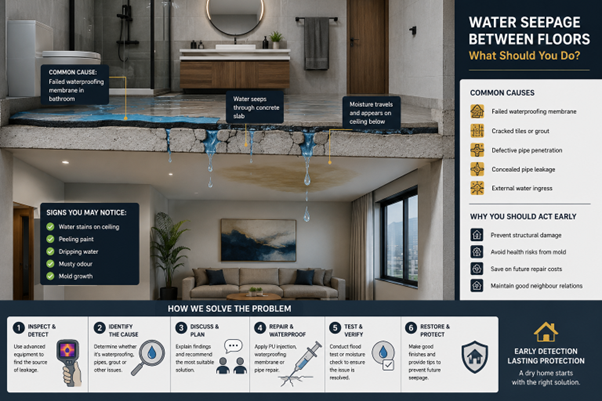
Water seepage between floors occurs when water from the upper level penetrates through the reinforced concrete slab and affects the ceiling or walls of the unit below. The moisture may travel some distance before becoming visible, making it difficult to determine the exact source of the problem.
In Singapore, this issue is commonly seen in bathrooms, kitchens, balconies, planter boxes, and areas exposed to frequent water usage. Because of our humid climate and heavy rainfall, waterproofing defects can become more apparent over time.
Common Signs of Water Seepage
Many homeowners only realise there is a problem when visible damage starts appearing. Some common signs include:
- Yellowish or brown water stains on the ceiling
- Bubbling or peeling paint
- Damp patches that remain even during dry weather
- Mould or mildew growth
- Cracks accompanied by moisture
- Dripping water from the ceiling
- Musty odours in the affected area
If you notice any of these symptoms, it is advisable to investigate the issue early rather than waiting for the damage to worsen.
What Causes Water Seepage Between Floors?
Several factors can contribute to water seepage between floors.
1. Failed Waterproofing Membrane
- One of the most common causes is the deterioration of the waterproofing membrane in bathrooms or wet areas. Waterproofing materials have a lifespan, and after years of use, they may lose their effectiveness, allowing water to penetrate through the concrete slab.
2. Cracked Grout or Tiles
- Hairline cracks in tiles or deteriorated grout joints may seem minor, but they can allow water to seep below the floor finish over time.
3. Defective Pipe Penetration Areas
- The areas surrounding floor traps, sanitary pipes, and water supply pipes are particularly vulnerable. If gaps develop around these penetrations, water can travel through the slab and appear in the unit below.
4. Concealed Pipe Leakage
- Hidden water pipes embedded within walls or floors can develop leaks due to aging or corrosion. Since these leaks are concealed, specialised inspection methods are often required to locate the source.
5. External Water Ingress
- Balconies, planter boxes, and rooftop areas exposed to rainwater may also contribute to water seepage issues if their waterproofing systems have failed.
Don’t Ignore the Problem
Some homeowners assume that a small stain is merely cosmetic and choose to repaint the affected area. Unfortunately, painting over water stains only hides the symptoms without addressing the root cause.
Continued water seepage may lead to:
- Damage to ceilings and walls
- Deterioration of concrete structures
- Rusting of reinforcement bars
- Mould growth affecting indoor air quality
- Disputes between neighbours
- More expensive repair works in the future
Prompt action can help minimise damage and prevent the issue from spreading.
Can Water Seepage Be Repaired Without Hacking?
For most homeowners in Singapore, the word “hacking” is almost as unwelcome as the water stain on the ceiling that prompted the call in the first place. Hacking means dust, noise, days of disruption, and a repair bill that often extends well beyond the original leak. So it’s no surprise that one of the first questions property owners ask is whether water seepage can be fixed without breaking open walls, floors, or ceilings.
The honest answer is: sometimes yes, sometimes no. It depends entirely on what is actually causing the seepage. Below, we break down when non-invasive repairs are realistic, when hacking genuinely can’t be avoided, and how to tell which situation you’re in before committing to either approach.
Step 1: Identify the Source of Leakage
Before carrying out repairs, it is important to determine where the water is coming from. This can sometimes be challenging because water often travels within the concrete slab before emerging elsewhere.
Professional inspection methods such as moisture meter testing, thermal imaging scans, flood testing, and ultrasonic leak detection are commonly used to accurately identify the source of water leakage. Moisture meters help detect areas with elevated moisture content, while thermal cameras reveal hidden dampness patterns through temperature differences. Flood testing is typically carried out in bathrooms and wet areas to verify the integrity of the waterproofing system, and ultrasonic equipment assists in locating concealed pipe and underground leaks by detecting abnormal sound frequencies. Accurate diagnosis is essential, as repairing the wrong area may lead to unnecessary costs and fail to address the root cause of the problem.
Step 2: Communicate with Your Neighbour
For apartments and condominiums, the source of seepage often originates from the unit above. In Singapore, neighbourly cooperation plays an important role in resolving such issues.
If water seepage is suspected to originate from the upper floor, it is advisable to inform your upstairs neighbour, share relevant photographs and observations, and arrange for a joint inspection. Engaging a professional waterproofing specialist for a thorough assessment can help determine the actual source of leakage and recommend the appropriate remedial measures. In most cases, the issue can be resolved amicably when both parties have a clear understanding of the cause of the problem.
Step 3: Choose the Appropriate Repair Method
Depending on the findings, different solutions may be recommended.
- PU Injection Grouting
- Polyurethane (PU) injection is commonly used to seal active water leak paths and gaps around pipe penetrations. This method is relatively non-invasive and can effectively stop water seepage in many situations.
- Re-Grouting and Sealant Replacement
- Where deteriorated grout joints are identified, replacing the grout and sealant may help prevent further water ingress.
- Waterproofing Membrane Replacement
- For bathrooms with failed waterproofing systems, hacking and redoing the waterproofing membrane may be necessary, especially if the existing membrane has reached the end of its lifespan.
- Pipe Repairs
- If leaking pipes are detected, repair or replacement of the affected plumbing system will be required.
- External Waterproofing Works
- Balconies, rooftops, and planter boxes may require waterproofing membrane applications to prevent rainwater penetration.
Can Water Seepage Be Repaired Without Hacking?
This is one of the most frequently asked questions among homeowners in Singapore. The answer depends on the cause of the leakage.
In some cases, non-hacking methods such as PU injection grouting can successfully stop water seepage without major demolition. However, if the waterproofing membrane has deteriorated extensively, hacking and replacement of the waterproofing system may still be the most reliable long-term solution.
A proper site assessment is necessary to determine the most suitable approach.
Prevention Is Better Than Cure
While not all water seepage problems can be prevented, regular maintenance can reduce the likelihood of future issues.
Homeowners can reduce the risk of water seepage by periodically inspecting grout joints, replacing deteriorated silicone sealants, repairing cracked tiles promptly, and addressing minor leaks before they worsen. Regular waterproofing inspections are also recommended for older properties to identify potential issues early. Timely intervention often helps prevent extensive damage and saves both time and repair costs.
Water seepage between floors is a common problem
Water seepage between floors is a common problem faced by many homeowners in Singapore, but it should never be ignored. Whether the issue stems from failed waterproofing, defective pipe penetrations, or concealed leaks, identifying the source accurately is the key to effective repairs.
If you notice ceiling stains, damp patches, or peeling paint, it is advisable to seek professional assistance as early as possible. Timely inspection and proper repair methods can prevent further structural damage and help restore peace of mind for both you and your neighbours.
After all, when it comes to water seepage, acting early is always better than waiting for a small problem to become a costly one.