
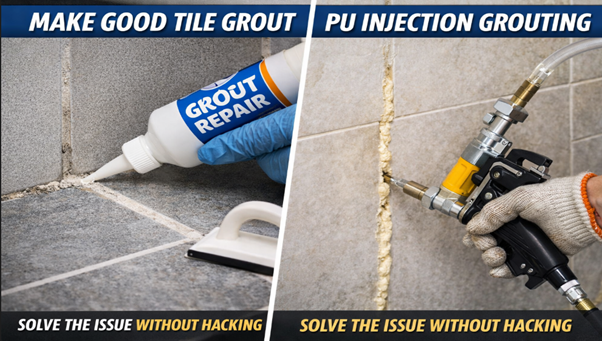
Bathroom or toilet leaks are common headache for homeowners in Singapore. In HDB flats, condominiums, and older apartments, it’s not unusual for water to seep through the bathroom floor and start appearing on the ceiling of the unit below. The first reaction many homeowners have is panic, mainly because traditional waterproofing repairs usually involve hacking bathroom tiles, which means noise, dust, and inconvenience.
However, in recent years, many contractors in Singapore have started offering non-hacking toilet waterproofing solutions. As the name suggests, this method allows waterproofing repairs to be done without removing the existing tiles. For many homeowners, it is a faster, cleaner, and more convenient alternative.
But how exactly does non-hacking waterproofing work, and when is it suitable? This article takes a closer look at these solutions.
Why Toilet Leaks Happen in Singapore Homes
Bathrooms/toilet handle more water than any other space in a home. In Singapore, where humidity is high and toilets are used frequently throughout the day, surfaces are constantly exposed to water from showers, washing, and routine cleaning. Over time, this continuous exposure can lead to several common issues:
- Waterproofing membranes beneath tiles start to age and lose effectiveness
- Tile grout cracks or wears out
- Fine hairline cracks form between tiles
- Tiles become loose or the screed turns hollow
- Sealants around fixtures deteriorate
When these defects occur, water begins to seep through tiny gaps. Eventually, it penetrates the slab and shows up as damp patches, water stains, or peeling paint on the ceiling of the unit below.
In the past, resolving such leakage typically required hacking and redoing the entire toilet floor waterproofing.
The Traditional Method: Hacking the Entire Bathroom
Before non-hacking solutions became popular, the standard repair method was complete bathroom hacking. This process usually involves:
- Removing existing tiles
- Removing the old waterproofing layer
- Applying a new waterproofing membrane
- Conducting water ponding tests
- Reinstalling tiles
While this method is effective and longer lasting, but it comes with many downsides being costlier, more time-consuming, and highly disruptive to homeowners, not to mention the significant amount of dusts and noise it will generate.
For homeowners who just renovated their bathroom a few years ago, hacking everything again can feel wasteful. This is why non-hacking waterproofing methods have become increasingly popular in Singapore.
What Is Non-Hacking Toilet Waterproofing?
Non-hacking waterproofing is a repair method that seals water leakage without removing existing tiles. Instead of accessing the waterproofing layer beneath the tiles, contractors apply specialized waterproofing solutions on top of the existing surface and through tile joints. These solutions penetrate the micro pores within grout lines and tiles, forming a protective waterproof barrier.
Because no hacking is required, the process is much faster and less disruptive. In many cases, the entire repair can be completed within a single day.
How Non-Hacking Waterproofing Process Works?
Although the exact methods may vary between contractors, the general process usually includes the following steps.
1. Inspection and Leak Assessment
Before any repair, the contractor will inspect key areas such as grout lines, floor trap joints, shower zones, wall-to-floor junctions, and fixture sealants to identify leakage points; if the issue stems from concealed pipes, non-hacking waterproofing will not be effective and plumbing repairs will be required instead.
2. Deep Cleaning of Tiles and Grout
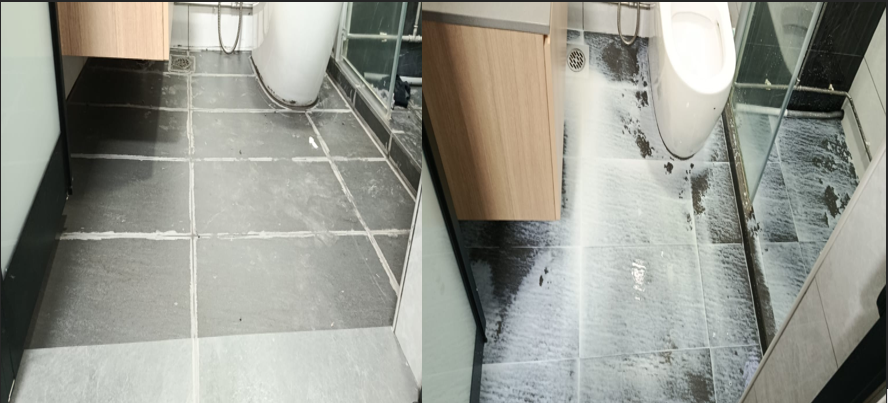
For waterproofing to be effective, the tile surface must be thoroughly cleaned through high-pressure washing, removal of soap scum and grime, and treatment of mould and algae, ensuring proper penetration of waterproofing materials into the grout lines.
3. Re-grouting Tile Joints
Worn grout is a common weak point in bathroom floors and can be replaced with waterproof grout to seal tile joints, preventing water from seeping beneath the tiles.
4. Application of Waterproofing Sealers
A specialized waterproofing solution is applied across the tiled surface. These sealers are designed to penetrate micro-cracks and pores within grout and tiles. Once cured, they create a water-repellent barrier that prevents moisture from entering the floor structure.
5. Floor Trap and Joint Sealing
Special attention is usually given to the floor trap area, which is one of the most common leakage points in Singapore toilets. Contractors seal the joint between the floor trap and surrounding tiles to prevent water infiltration.
6. Drying and Curing
After application, the waterproofing layer needs time to cure. Most non-hacking treatments allow the bathroom to be used again within 24 hours.
Advantages of Non-Hacking Waterproofing
Many homeowners prefer non-hacking waterproofing because of its convenience. Some key benefits include:
- Minimal Disruption
- Since no hacking is required, there is no loud drilling, dust, or debris. This is especially important in HDB flats where renovation noise can disturb neighbours.
- Faster Completion
- Traditional bathroom waterproofing repairs can take more than a week. Non-hacking solutions are usually completed within a few hours to one day.
- Cost-Effective
- Because tiles and screed are not removed, labour and material costs are significantly lower. This makes non-hacking waterproofing an attractive option for homeowners who want to fix leaks without undergoing a full renovation.
- Preserves Existing Bathroom Design
- If your bathroom tiles are still in good condition, non-hacking waterproofing allows you to keep the original design intact. This is particularly useful if the tiles are no longer available in the market.
When Non-Hacking Waterproofing Works Best
Although non-hacking waterproofing is convenient, it is not suitable for every water leakage situation. It only works best when leaks are not so severe and caused by:
- Hairline cracks in grout
- Minor tile joint gaps
- Surface water penetration
- Small waterproofing deterioration
However, if the leak is due to broken concealed pipes, major structural cracks or completely failed waterproofing membrane, then more extensive repairs may be required. A proper inspection is always necessary before deciding on the repair method.
Non Hacking Waterproofing in Singapore Homes
In Singapore, many homeowners opt for non-hacking waterproofing because of the way apartments are designed. Since toilets are stacked vertically in HDB flats and condos, leakage from one unit can easily affect the neighbour below.
A quick repair solution helps resolve disputes faster and prevents damage from spreading. For units that recently completed renovation or are within the first few years of use, non-hacking methods are often sufficient to address minor seepage issues.
After waterproofing repairs are done, regular maintenance helps extend the lifespan of your bathroom. These are some ways homeowners can extend the lifespan of the waterproofing system:
- Check grout lines periodically
- Replace cracked silicone sealant
- Avoid harsh acid cleaners that damage grout
- Ensure proper drainage near the floor trap
Simple maintenance can prevent small issues from turning into major leaks.
Why Would A Non Hacking Toilet Waterproofing Work Best
Bathroom leakage problems are a common concern in Singapore’s apartments and HDB flats, but not every situation requires a full bathroom overhaul.
Non-hacking toilet waterproofing offers a fast and practical solution for minor leakage issues. By sealing tile joints and applying specialized waterproofing treatments, contractors can often stop leaks without removing tiles or disrupting the household.
For homeowners looking for a quicker and more cost-effective repair method, non-hacking waterproofing is definitely worth considering, especially when the bathroom is still relatively new and the tiles are in good condition. With the right assessment and professional workmanship, it is possible to restore a leak-free bathroom without the mess and inconvenience of traditional hacking works.