If you have lived in Singapore long enough, you would know one thing for sure is that our weather is unforgiving to buildings. One moment it is blazing hot under the afternoon sun, and the next moment, heavy rain pours for hours. Add in the year-round humidity, and it becomes clear why waterproofing problems are so common in local homes and buildings.
Many homeowners only start paying attention to waterproofing after they notice ceiling stains, bubbling paint, mould growth, or water dripping into the unit below. By then, the damage has often already spread beneath tiles, inside concrete slabs, or through wall joints. What many people do not realise is that Singapore’s tropical climate directly shortens the lifespan of waterproofing systems over time.
This article helps understanding how our climate affects waterproofing directly or indirectly, which in turn help homeowners detect issues earlier, maintain their property better, and avoid expensive repairs later on.
Singapore’s Climate Is Tough on Buildings
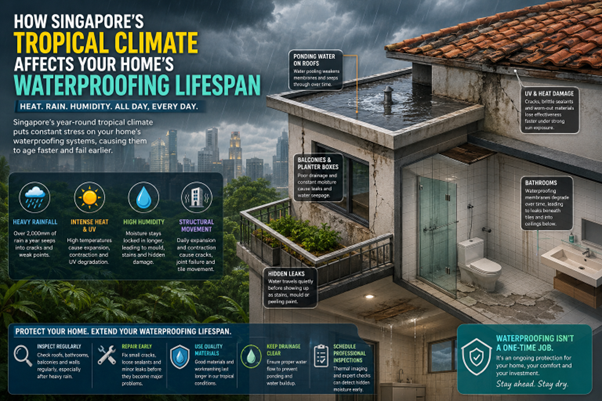
Singapore experiences high humidity levels throughout the year, often above 80%, combined with frequent rainfall and strong UV exposure. Unlike countries with four seasons where buildings may have dry periods, our properties are constantly exposed to moisture.
This continuous cycle of heat, rain, and humidity causes waterproofing materials to age faster than expected. Even high-quality waterproofing membranes and sealants will eventually deteriorate under these conditions if not properly maintained.
In landed houses, common affected areas include roofs, balconies, planter boxes, toilets, and external walls. In condominiums and HDB flats, bathrooms and window perimeters are among the most frequent leakage points.
Constant Rainfall Weakens Waterproofing Over Time
Singapore receives an average annual rainfall of more than 2,000mm. During monsoon seasons, prolonged rain can expose weaknesses in waterproofing systems that may otherwise go unnoticed during dry periods.
Water naturally seeks the path of least resistance. Small cracks in tile grout, failed silicone joints, or hairline concrete cracks can slowly allow water seepage into underlying structures. Over time, trapped moisture accumulates beneath finishes and starts damaging the waterproofing layer itself.
This is especially common in older bathrooms where the original waterproofing membrane may already be deteriorating after years of use. Homeowners sometimes assume the issue is minor because they only see a small water stain downstairs. However, the actual affected area beneath the tiles can be much larger.
Roof waterproofing also suffers significantly during heavy rainstorms. Ponding water on flat roofs or water trapped beneath roof tiles can slowly penetrate through compromised membranes and cracks.
Heat and UV Exposure Cause Material Deterioration
While rain is an obvious factor, Singapore’s intense sunlight is equally damaging to waterproofing systems. During hot afternoons, roof surfaces and exposed external walls can reach very high temperatures. Waterproofing materials expand under heat and contract again during cooler periods or rainfall. This constant movement stresses the material over time.
UV rays from direct sunlight can also dry out and weaken certain sealants and coatings. Polyurethane sealants, silicone joints, and exposed waterproof coatings may become brittle, crack, or lose adhesion after years of exposure.
This is commonly seen around:
- Window frame joints
- Roof flashing details
- Balcony edges
- External wall cracks
- Skylight perimeters
Once cracks develop, rainwater can easily penetrate into the substrate below.
High Humidity Encourages Hidden Moisture Problems
Singapore’s humidity creates another challenge which is moisture does not dry easily. In cooler climates, wet surfaces may dry out relatively quickly after rain. Here, moisture often remains trapped for long periods, especially in poorly ventilated areas like bathrooms, service yards, or concealed roof spaces.
Persistent moisture encourages mould growth, efflorescence, and deterioration of construction materials. Concrete may appear dry on the surface while still retaining internal moisture.
This is why some water leakage cases become difficult to diagnose accurately. Homeowners may repair visible cracks repeatedly without solving the actual source of water ingress. In many situations, professional thermal leak detection inspections are used to identify hidden moisture beneath tiles, ceilings, or walls without unnecessary hacking.
Tile Movement and Structural Expansion Affect Waterproofing
Buildings in Singapore constantly expand and contract due to temperature fluctuations. Although the movement may be small, it gradually affects tiled surfaces and waterproofing layers beneath them. Over time, tiles may become hollow, grout lines crack, and joints separate slightly. Once water enters through these weak points, it starts attacking the waterproofing system underneath.
Bathrooms are especially vulnerable because they experience both water exposure and temperature changes daily. Hot showers, cleaning chemicals, and continuous moisture all contribute to gradual wear and tear.
This explains why water leakage in older bathrooms often occurs even when tiles still appear visually acceptable on the surface.
Poor Maintenance Shortens Waterproofing Lifespan Further
Climate alone is not the only problem. Lack of maintenance significantly accelerates waterproofing failure. Many homeowners overlook small warning signs such as:
- Peeling paint
- Musty smells
- Hairline cracks
- Loose sealants
- Damp skirting
- Hollow tiles
- Minor ceiling stains
These symptoms are often early indicators of moisture intrusion. Unfortunately, minor leaks left unattended can eventually affect neighbouring units, electrical systems, timber finishes, and even structural components. In condominiums and apartments, unresolved leakage disputes between upper and lower units are also very common.
Routine inspections and timely repairs can greatly extend the lifespan of waterproofing systems.
How Long Does Waterproofing Typically Last in Singapore?
The lifespan of waterproofing depends on the type of material used, workmanship quality, exposure conditions, and maintenance practices.
In Singapore’s tropical climate, toilet waterproofing systems generally last around 10–15 years, roof waterproofing systems around 5–15 years depending on exposure, while sealants around windows and joints may require replacement every few years and external wall coatings may deteriorate faster under direct UV exposure. However, these are only general estimates, as poor installation workmanship and lack of maintenance can lead to much earlier waterproofing failure even for premium systems.
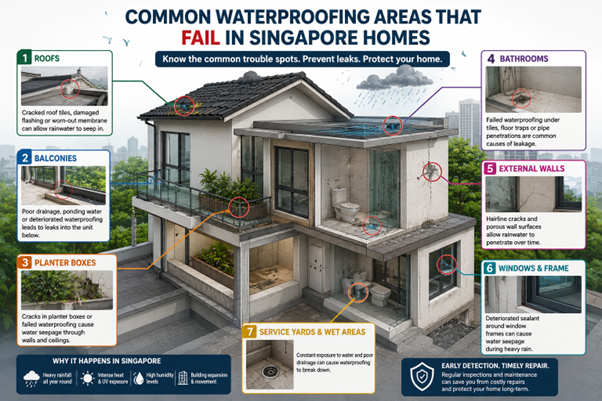
Common Waterproofing Areas That Fail in Singapore Homes
Certain parts of a property are more vulnerable due to constant exposure to moisture and weather.
1. Bathrooms
- Bathroom leakage remains one of the most common residential issues in Singapore. Failed floor trap detailing, cracked grout lines, deteriorated waterproof membranes, and pipe penetrations are frequent causes.
2. Roofs
- Roof tiles, flashing details, gutters, and flat roof membranes are heavily exposed to both rain and UV rays. Small defects can quickly develop into major leakage problems.
3. Balconies and Planter Boxes
- These areas often experience water ponding and poor drainage. Over time, moisture penetrates through cracks and weak waterproofing points.
4. External Walls
- Hairline cracks on external walls may appear harmless initially but can eventually allow rainwater seepage into interior spaces.
5. Windows and Facade Joints
- Old or deteriorated sealants around aluminium window frames are a common source of water ingress during heavy rain.
Preventive Maintenance Saves Money Long-Term
Many homeowners hesitate to address waterproofing issues early because the leak may seem minor. However, preventive maintenance is usually far more affordable than major rectification works later.
For example, resealing failed joints or repairing isolated cracks early may prevent the need for full hacking and waterproofing replacement later on.
Regular inspections after heavy rain, especially for older properties, can help identify issues before they worsen. Professional waterproofing contractors may also recommend periodic resealing, protective coatings, or thermal leak detection checks for vulnerable areas.
Why Singapore’s Tropical Climate Affects Your Home’s Waterproofing Lifespan
Singapore’s tropical climate creates one of the harshest environments for waterproofing systems. Constant rain, humidity, heat, and UV exposure all contribute to faster material deterioration over time.
Even well-constructed properties will eventually experience waterproofing wear and tear if maintenance is neglected. The key is early detection and timely repair before water damage spreads further.
For homeowners in Singapore, waterproofing should not be treated as a one-time installation. It is an ongoing part of property maintenance that protects not only your home’s appearance, but also its long-term structural condition and value.