
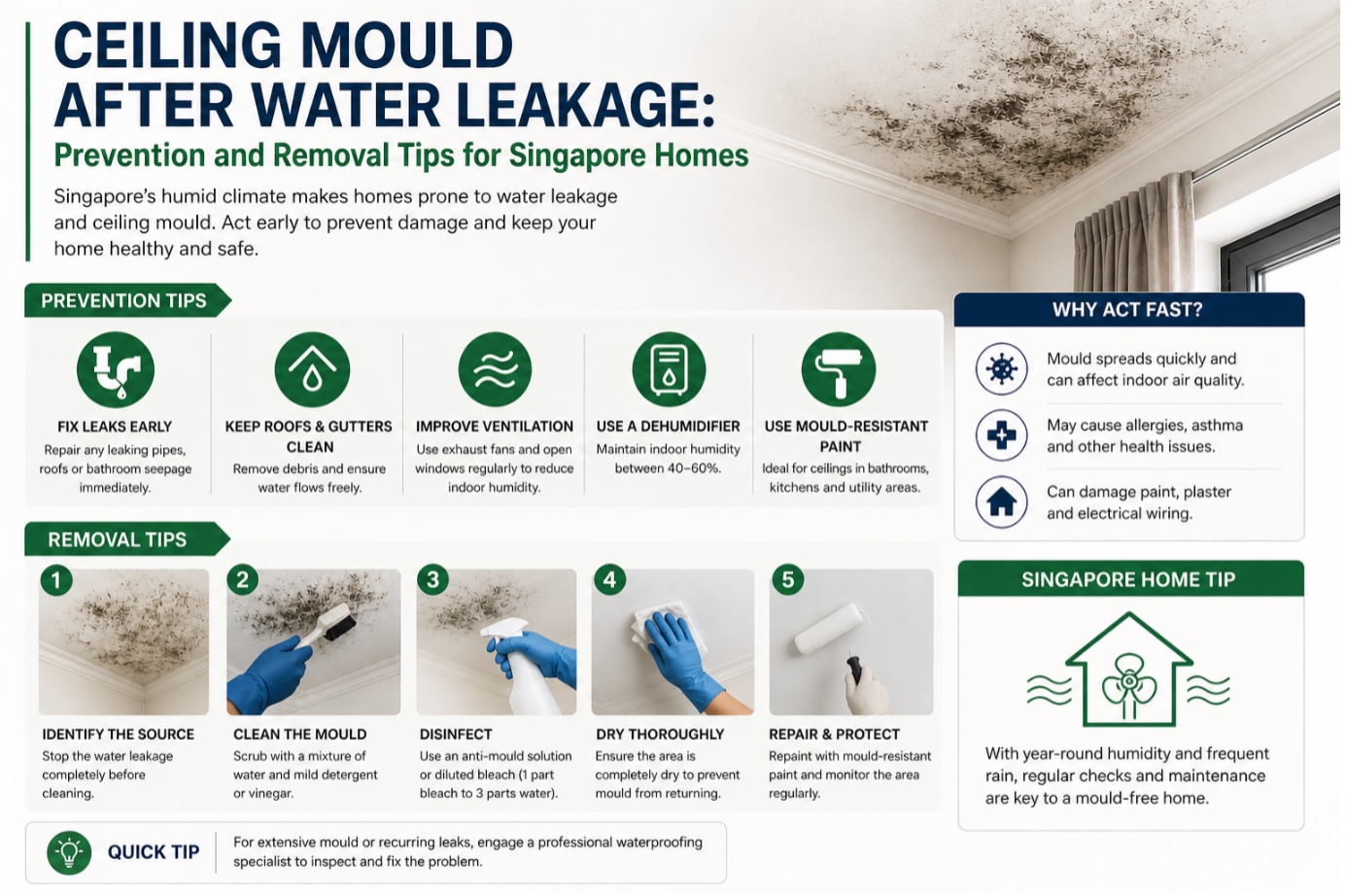
Ceiling mould is something many homeowners in Singapore eventually encounter, especially after a water leak. Whether it’s from an upstairs neighbour, a cracked waterproofing membrane, or condensation issues in air-conditioned rooms, mould can quickly spread if left untreated. Beyond the unpleasant appearance, it can also affect indoor air quality and even your health.
If you’ve noticed dark patches, peeling paint, or a musty smell coming from your ceiling, it’s time to act. This article is a practical and locally relevant guide on how to prevent and remove ceiling mould effectively.
Why Ceiling Mould Happens in Singapore
Singapore’s climate plays a big role. With high humidity levels year-round, moisture doesn’t evaporate easily. Once water seeps into your ceiling whether from a leaking pipe, roof, or bathroom above, it creates the perfect breeding ground for mould.
Common causes of ceiling mould include water leakage from upper-floor units, something frequently seen in HDB flats and condominiums along with roof leaks in top-floor or landed properties. Poor ventilation in areas like bathrooms and kitchens can also create the perfect environment for mould growth, while condensation from air-conditioning units is another often-overlooked contributor.
In many situations, what you see on the surface is only part of the problem. The visible mould is usually a symptom, not the root cause. The real issue often lies deeper which is trapped moisture within the ceiling slab or plaster, which continues to feed mould growth if not properly addressed.
Early Signs You Shouldn’t Ignore
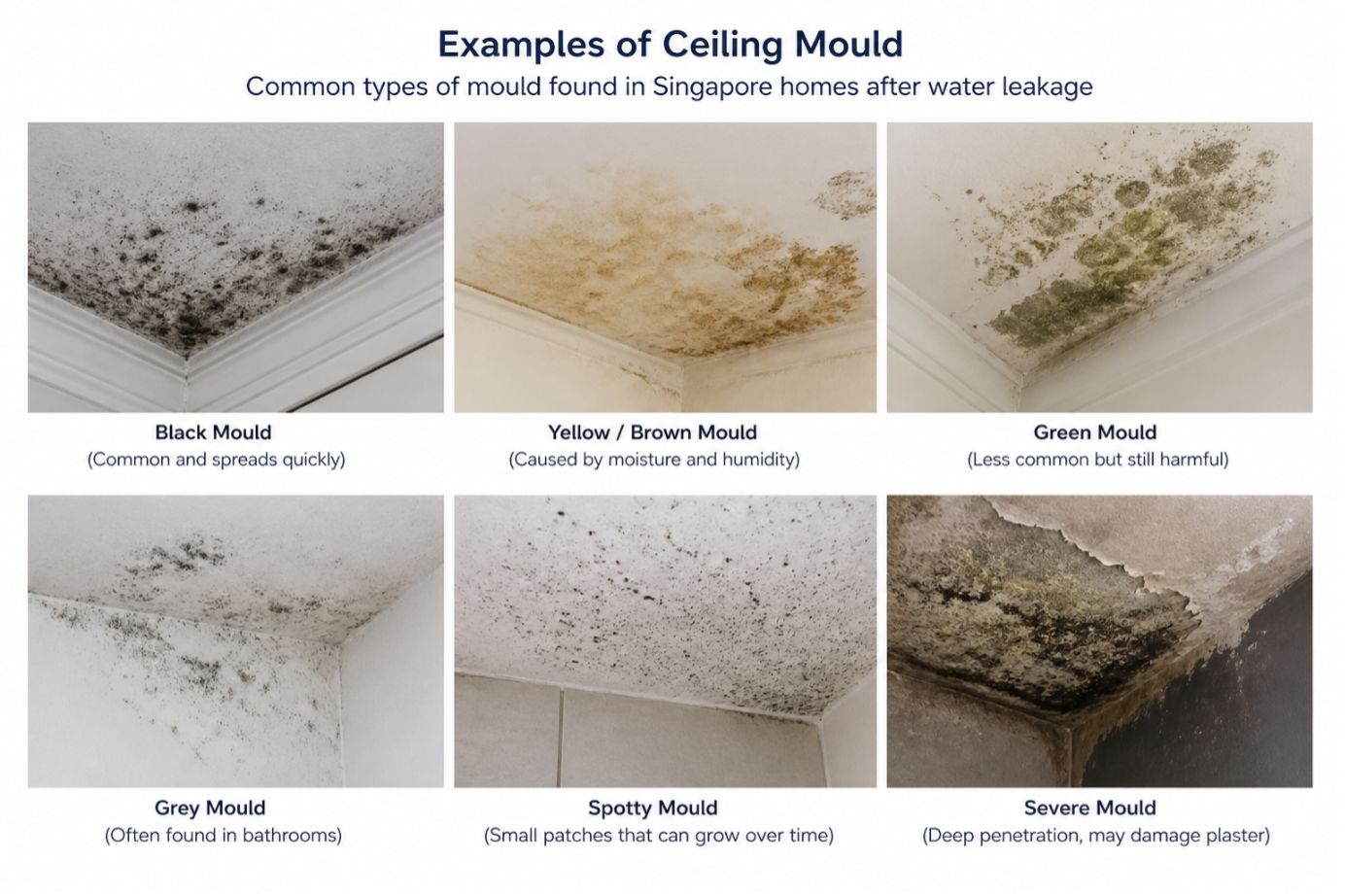
Many homeowners only take action when the mould becomes severe, but catching the problem early can save a lot of time, cost, and frustration. Some common warning signs to look out for include yellowish or brown water stains on the ceiling, bubbling or peeling paint, and black or green spots that start appearing in clusters. You might also notice a damp or musty smell lingering in the room, especially after rain or when the air feels humid.
If you spot any of these signs, avoid the common mistake of simply repainting over the area. It may improve the appearance temporarily, but it doesn’t solve the underlying issue, and the mould will almost certainly return.
Step 1: Fix the Source of the Leak
Before you even think about cleaning the mould, the first step is to fix the source of the water leak. Otherwise, no matter how thorough the cleaning is, the mould will simply come back.
The solution depends on what’s causing the moisture in the first place. If it’s coming from an upstairs neighbour, repairs usually involve coordinating with them and often require waterproofing works in their bathroom. For top-floor units or landed homes, roof leakage is a common issue and will need proper waterproofing treatment. If the problem is due to leaking pipes, then plumbing repairs or replacement are necessary. In cases where condensation is the main cause, improving ventilation or adding insulation can make a big difference.
In Singapore, when the leak involves neighbouring units, the responsibility may be shared under guidelines set by the Housing & Development Board (HDB). Because of this, it’s best to address the issue early and work things out quickly, before the damage worsens and the mould spreads further.
Step 2: Removing Ceiling Mould
Once the source of the leak has been fixed and the ceiling is fully dry, you can move on to removing the mould.
- For mild mould (small patches):
This is something most homeowners can handle on their own. Start by preparing a mild cleaning solution, either diluted bleach or a suitable anti-mould cleaner. Using a soft cloth or sponge, gently wipe down the affected area. There’s no need to scrub aggressively, as this can damage the paint or even the plaster beneath. After cleaning, allow the area to dry completely. Proper drying is just as important as the cleaning itself, as any remaining moisture can encourage mould to return. Make sure the room is well-ventilated throughout the process. Open windows, switch on exhaust fans, or use a fan to help speed up drying and reduce exposure to fumes.
- For moderate to severe mould:
If the mould has spread across a larger area or penetrated deeper into the ceiling, simple surface cleaning won’t be enough. In such cases, the affected paint and even parts of the plaster may need to be carefully scraped off to remove the contaminated layer. This is usually followed by the application of an anti-fungal treatment to kill any remaining spores. Once the area is properly treated and fully dried, repainting with a mould-resistant paint is strongly recommended to reduce the chances of recurrence. At this stage, it’s generally advisable to engage professionals. Improper removal can disturb and release mould spores into the air, which may spread the problem further and pose health risks if not handled correctly.
Step 3: Repainting the Ceiling Properly
After cleaning, many homeowners are eager to repaint but proper preparation makes all the difference. A good repainting process starts with ensuring the surface is completely dry. Any trapped moisture can lead to mould returning sooner than expected. Next, apply an anti-mould or anti-fungal primer to treat the surface and create a protective base. Finally, use a high-quality mould-resistant paint to provide longer-lasting protection, especially in humid areas.
Skipping these steps is one of the most common reasons mould reappears within just a few months, even after it seems like the problem has been fixed.
Prevention Tips That Actually Work
Once you’ve dealt with ceiling mould, the next goal is to prevent it from returning. In Singapore’s humid environment, this requires a combination of habits and maintenance.
- Improve Ventilation
- Keep windows open when possible
- Install or use exhaust fans in bathrooms
- Avoid trapping humid air indoors
- Manage Indoor Humidity
- Use a dehumidifier in enclosed rooms
- Avoid drying clothes indoors without ventilation
- Run air-conditioning occasionally to reduce moisture
- Regular Ceiling Checks
- Inspect ceilings every few months, especially after heavy rain
- Look out for new stains or damp patches
- Maintain Waterproofing
- For bathrooms and roofs, waterproofing doesn’t last forever. If your property is older, it might be time to redo it before leaks start.
Health Concerns: More Than Just Aesthetic
Mould isn’t just unsightly but it can also affect your health. Based on general guidance referenced by organisations such as the National Environment Agency (NEA), prolonged exposure to mould may trigger allergies, respiratory issues, and even skin irritation.
This becomes especially important in households with young children, elderly family members, or anyone with asthma or other breathing conditions, as they tend to be more sensitive to indoor air quality.
Not every mould issue requires a contractor, but there are clear situations where professional help is worth considering. If the mould keeps returning despite repeated cleaning, it usually means the root cause hasn’t been properly resolved. The same applies when the affected area is large. Generally, more than 1–2 square metres or when there’s a strong, persistent musty smell that doesn’t go away. Another warning sign is when the ceiling starts to feel soft, damp, or visibly damaged, which could indicate deeper structural moisture issues.
In these cases, engaging professionals can save time and prevent the problem from worsening. They have access to specialised tools such as moisture meters and thermal imaging equipment to detect hidden leaks or trapped moisture, something that’s difficult to identify with the naked eye.
Why Mould Keeps Coming Back in Singapore
One common mistake homeowners make is treating mould as just a surface problem. In reality, Singapore’s climate means moisture is always present. Without fixing the root cause and applying proper preventive measures, mould will almost always return.
Another factor is renovation shortcuts, especially in older flats where waterproofing or sealing wasn’t done properly. Even a small hairline crack can allow water to seep through over time.
Ceiling Mould Prevention and Removal Tips for Singapore Home
Ceiling mould after water leakage is a common but manageable problem in Singapore homes. The key is not to treat it as a cosmetic issue. Fix the leak, clean the mould properly, and take preventive steps to control moisture.
If handled correctly, you won’t just remove the mould, you’ll stop it from coming back entirely. For homeowners, it’s always worth acting early. A small patch today can turn into a major repair tomorrow if ignored.